Why Do Projects Lose Control After Design Changes?
Jun 01, 2026
Anyone who has worked on facade projects knows that design changes are almost inevitable.
Sometimes architects adjust the facade appearance.
Sometimes clients introduce new requirements.
Sometimes consultants add technical requirements.
And sometimes issues are discovered during construction that require modifications to the original design.
From a project management perspective, design changes themselves are not the problem.
The real challenge is that many teams underestimate their impact.
And this is often where projects begin to lose control.
During project meetings, we often hear comments such as:
"It's only a minor adjustment to the glass size."
"We're just moving a few grid lines."
"We're simply changing the material specification."
At first glance, these modifications seem insignificant.
However, within a facade system, things are rarely that simple.
When a glass size changes:
Structural calculations may need to be revalidated.
Aluminum profiles may require redesign.
Connection details may need adjustment.
Shop drawings must be updated.
Procurement schedules may change.
Production planning may be affected.
Installation sequences may require revision.
On a rendering, it may look like a simple line has moved.
From an engineering perspective, however, it can affect the entire system.
When projects experience delays, budget overruns, or excessive rework, many people immediately focus on site activities.
Common explanations include:
Poor construction management
Low installation efficiency
Late material delivery
Insufficient supplier coordination
Yet project reviews often reveal a different story.
Many of these issues can be traced back to decisions made much earlier.
Particularly after design changes have been introduced without a thorough assessment of their consequences.
The risks may not be visible immediately.
But as the project progresses into procurement, manufacturing, and installation, those hidden impacts begin to surface.
By then, solving the problem is significantly more expensive than addressing it during the design stage.
In my experience, projects rarely fail because of a single design change.
They lose control because design changes are not managed properly.
The most common situations include:
Decisions made too quickly
Delayed communication between disciplines
Outdated drawings being used
Incomplete impact assessments
Poor coordination between design and construction teams
Individually, these issues may seem manageable.
Together, however, they create uncertainty throughout the project.
As a result:
Schedules become increasingly difficult to maintain.
Costs continue to rise.
Coordination becomes more complicated.
Project teams become reactive rather than proactive.
Eventually, the project begins to drift away from its original objectives.
Many clients believe that shop drawing development is simply about producing detailed drawings.
In reality, one of its most valuable functions is helping teams understand the consequences of change.
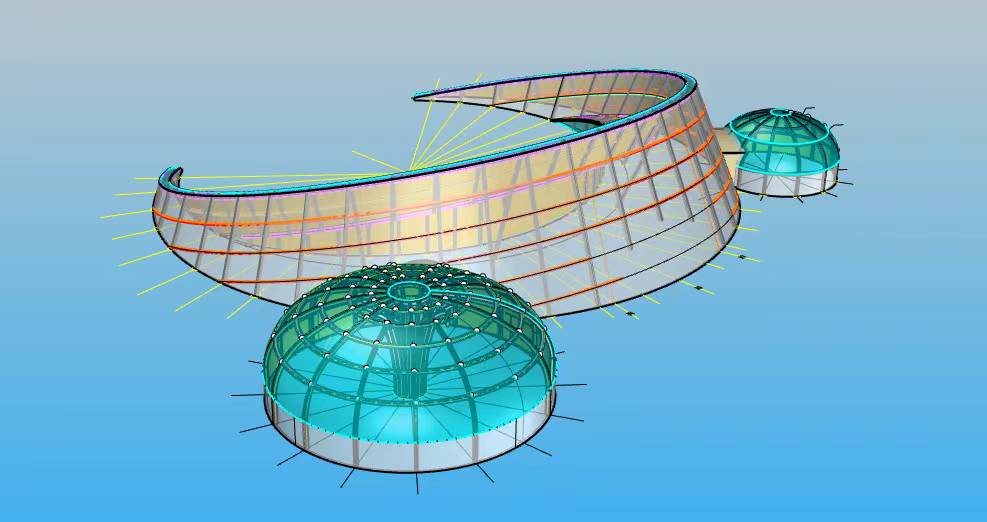
When a project is supported by a well-developed 3D model, coordinated details, and a structured material system, teams can quickly evaluate:
Which areas are affected
Which drawings require revision
Which materials must be adjusted
Which risks need immediate attention
This is one of the reasons why complex projects increasingly rely on:
BIM coordination
3D modeling
Digital design management
Formal change control procedures
Solving problems during design is always more efficient than solving them on site.
I have always believed that successful project teams are not those that avoid design changes.
They are the teams that can quickly understand the implications of change and respond accordingly.
Design changes themselves do not cause projects to fail.
What causes projects to lose control is the failure to fully understand their impact.
Design changes are a natural part of modern construction projects.
They can improve architectural outcomes, but they can also introduce new challenges.
Project success is not determined by whether changes occur.
It is determined by how effectively those changes are managed.
From a facade engineering perspective, the earlier a team understands the consequences of change, the easier it becomes to maintain project control.
Many project problems do not begin on site.
They begin the moment a design change is made without fully understanding what it may affect.
Architectural renderings can be visually impressive.
But not every design can be successfully manufactured, transported, and installed.
In the next article, we will explore the key engineering principles used to evaluate whether a facade concept is truly buildable.
Connect with our project consultant on LinkedIn: https://www.linkedin.com/in/kevin-zhang-5908613a6
#FacadeEngineering#BuildingEnvelope#CurtainWall#ConstructionManagement#ArchitecturalDesign