Why Is Delivery Time More Important Than Price?
Jun 07, 2026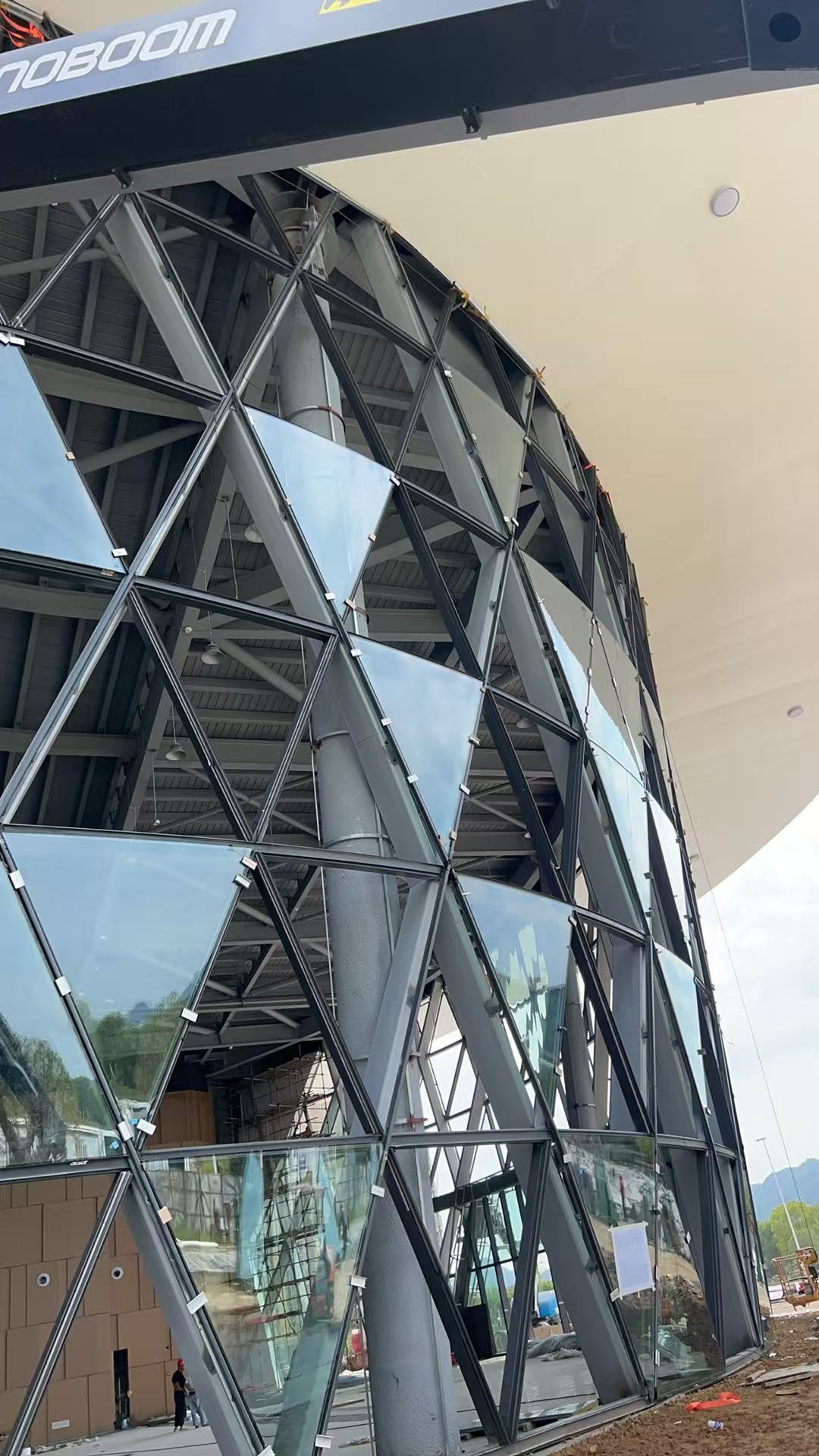
Over the years of working on international facade projects, one of my views has changed significantly.
When I first entered the industry, I believed that price was the most important factor.
Clients focused on price.
Procurement teams focused on price.
And during tendering, most discussions revolved around price.
But as I became involved in more projects, I gradually realized that the biggest challenges rarely came from pricing.
More often, they came from delivery schedules.
Several years ago, we were involved in an overseas project that entered the procurement stage after months of design coordination.
As expected, the client spent considerable time comparing quotations from different suppliers.
Eventually, a lower-priced supplier was selected.
From a procurement perspective, the decision seemed entirely reasonable.
The contract value was lower, and the project appeared to save a significant amount of money.
However, what happened afterward changed the way many people on the project viewed supplier selection.
Due to production planning and supply chain coordination issues, the delivery of key materials was delayed by nearly two months.
On paper, it looked like a simple delivery delay.
In reality, the impact was much greater.
Installation teams had to wait.
Certain equipment remained idle.
Follow-on trades could not proceed as planned.
The construction schedule gradually lost momentum.
When the project was finally completed and reviewed, the additional costs caused by the delay were far greater than the amount originally saved during procurement.
That experience taught me an important lesson:
For many construction projects, the most expensive supplier is not necessarily the one with the highest price.
Often, it is the supplier that cannot deliver on time.
Price is easy to compare.
Every supplier submits a quotation.
The numbers are clear and measurable.
Delivery-related costs are different.
They rarely appear on a quotation sheet.
Yet they can have a significant impact on project performance.
Examples may include:
These costs often emerge gradually during project execution.
By the time they become visible, recovering lost time is usually far more difficult than saving money upfront.
In many construction projects, the facade package sits on the critical path.
Once the primary structure is completed, many downstream activities depend on the building envelope being installed and enclosed.
If facade materials arrive late:
Mechanical and electrical works may be affected.
Interior fit-out activities may be delayed.
Testing and commissioning schedules may be compressed.
Project handover dates may come under pressure.
From a project management perspective, a facade delay is rarely just a facade problem.
It often becomes a project-wide problem.
After working with developers, contractors, consultants, and facade specialists from different regions, I have noticed a common pattern.
Experienced project teams rarely focus only on unit price.
Instead, they ask different questions:
Because they understand something important:
The greatest risk in a project is often not price.
It is uncertainty.
For large-scale projects, a reliable delivery plan is frequently more valuable than a small percentage difference in procurement cost.
I am not suggesting that price is unimportant.
Every project must control costs.
However, as projects become larger and more complex, I have become increasingly convinced that price is only one part of the decision.
Delivery capability often has a much greater influence on the final outcome.
Budget overruns can sometimes be managed.
Lost time is much harder to recover.
Whenever clients ask about pricing, I encourage them to consider another question as well:
Beyond the quotation, does the supplier have the capability to deliver reliably?
Because in construction projects, the lowest price does not always lead to the lowest overall cost.
In many cases, project success is determined not by how much money was saved during procurement, but by whether the project was delivered according to plan.
The cheapest supplier is not always the lowest-cost supplier.
Delays often cost far more than price differences.
Connect with our project consultant on LinkedIn: https://www.linkedin.com/in/kevin-zhang-5908613a6